
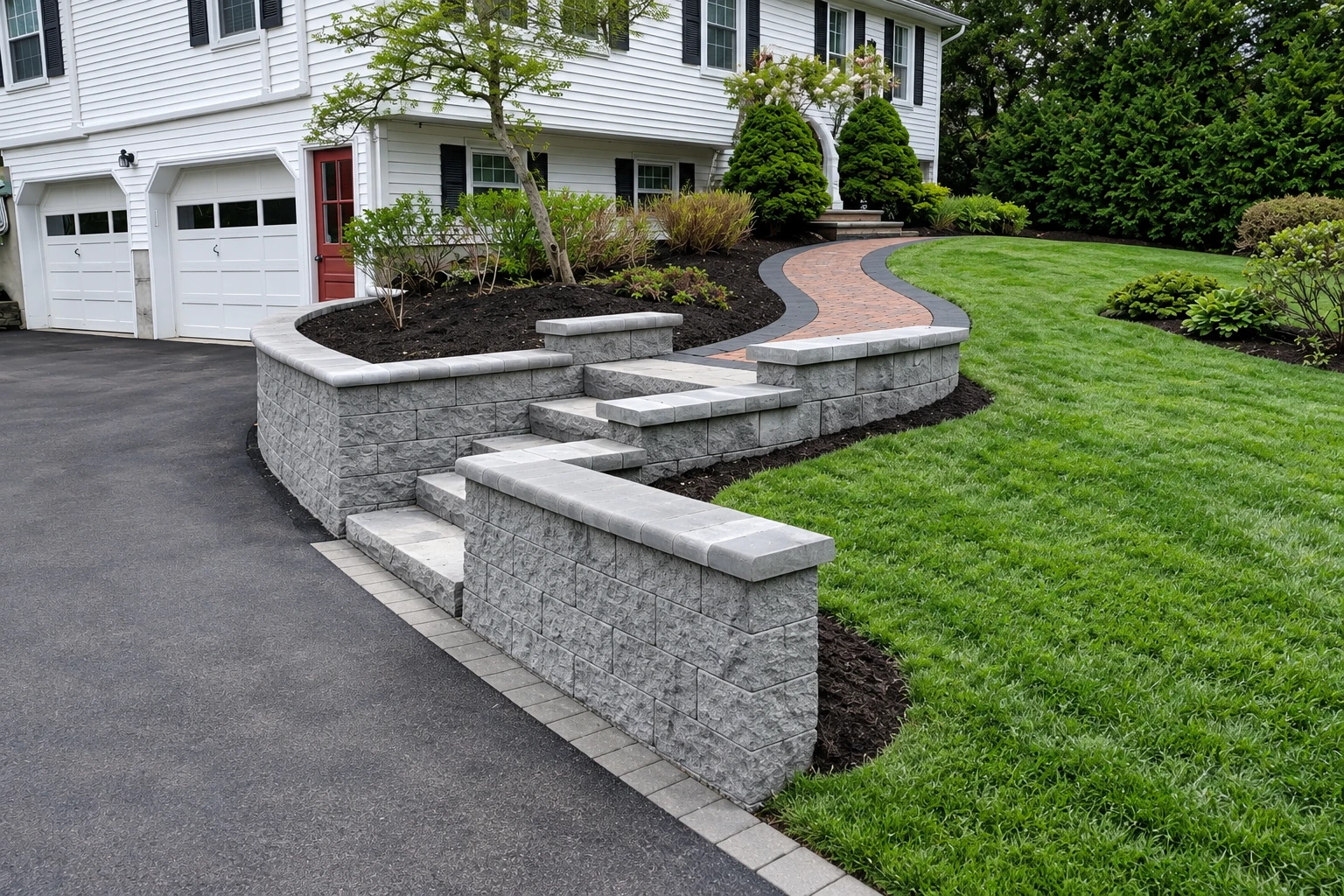
Concrete block walls in El Dorado Hills CA - built to stay straight and solid
Need privacy from the street or a slope held back? We get the footing, steel and drainage right so your block wall holds up.
Tell us what your wall needs to do
Call (916) 260-2151 or use the form, and if you send the rough length, height and a few photos, I'll already know what to look for when I come out.
What goes into a concrete block wall in El Dorado Hills?
A concrete block wall is a masonry wall that screens your yard, cuts down noise and wind, or holds back a slope, and we build them in El Dorado Hills from the footing up.
Most calls start with a hillside yard that needs holding back, or a fence line that should be more private and quieter than wood allows. The price moves with the kind of wall, the footing, how much steel goes in, whether it's holding back dirt and how tall and thick it runs. The schedule mostly turns on how much digging the footing takes and whether a permit is needed, and when one is, we find out which office covers your address and handle the application and inspections. Once I've seen your yard, you get a written estimate with your own numbers in it.
Why El Dorado Hills homeowners call us for block walls
The owner writes your estimate
We've been based in El Dorado Hills since 2013 and build in many of the cities around it. I come out myself to look at your spot and write the estimate, so you're talking to the person who planned the wall.
We check the ground first
About 69% of El Dorado County's mapped soil rates low for shrink and swell, but not every yard sits on that kind. I look at your ground before planning the footing, because the footing decides whether the wall stays put.
Fully licensed and insured
We're fully licensed and insured. Our own crew does the building under a lead mason, so the people working in your yard are ours and answer to us.
On a block wall, what matters most is the part that ends up buried. Tell us about your wall and I'll come take a look.
How we build a concrete block wall
I start by asking what the wall is for, since a privacy wall and a wall holding back dirt are two different jobs. A freestanding block fence takes the weather on both sides, so we dig and pour a solid footing, lay the block straight and finish it with a coping, a cap along the top that keeps water out and makes the wall look finished. On a retaining wall, the footing is what keeps the wall from tipping or sliding under the dirt behind it, and steel set upright in the block's hollow cores takes that push. The footing, the steel and the drainage go right in the written estimate, so you can line our bid up against anyone else's and compare the design and the work, not just the bottom line.
Block walls often lead to other work. If the block is going to carry a house, garage or addition, that's foundation block wall installation, and we plan it as its own job. If a new wall is closing in your patio, the same block can frame a grill counter or seating with outdoor kitchen masonry.
Privacy and screening wall
This suits a yard along a busy street or a close neighbor, where you want security, less noise and some shade or wind protection. It stands on its own, so it needs a good footing but no backfill.
Retaining wall for a slope
This suits a hillside lot where dirt is creeping into the yard or you want flat ground to use. Holding back soil makes it a structural job, so the steel and drainage matter as much as the block.
Low garden or accent wall
This suits a planter bed, a patio edge or a yard that just needs some shape. You can top it with concrete brick, cast stone, brick or natural stone to match the house.
How do you know it's time for a block wall, or that yours needs work?
Wall leaning away from the slope
A retaining wall tipping outward is usually losing to the dirt and water behind it. The lean tends to keep growing, and catching it early can mean a repair instead of a rebuild.
Cracks through the block
Cracks running through the block or stepping along the joints usually mean the wall moved or shrank with nowhere to go. Water gets in through them and opens them wider every wet season.
Mud or water at the base
Wet ground or mud seeping out at the foot of a wall after rain usually means water is trapped behind it. Trapped water keeps pushing, and that steady push is what tips walls over.
A wood fence that keeps failing
Leaning posts and rotted boards that need fixing again and again tell you wood isn't holding up in that spot. Every round of patching costs money that could go toward a wall that won't rot.
What happens after you call about a block wall?
I come out and look
You call or send a message, and I come out myself to walk the spot and talk it over with you. You get a written estimate, and if the wall needs a permit, we take care of it before we start.
Our crew builds the wall
Our lead mason and crew do the work, and I stop by to check on it. State rules say any change to your contract goes in writing, in plain words, with your right to cancel.
We walk it together
When the wall's done, we walk the finished job together so you can look over the joints, the cap and the cleanup. Ask me anything, since you're the one living with it.
Block wall questions we hear
These are the questions folks ask most when they're planning a block wall. If yours isn't here, send it with your photos or ask me when I come out.
How much does a concrete block wall cost in El Dorado Hills?
Installed freestanding concrete block walls across the US usually cost about $15 to $30 per square foot. That's a national figure for a wall standing on its own, not our price, and a retaining wall with more steel and drainage works out differently. I'll look at your spot for free and send a written estimate with your own numbers.
Does a block retaining wall need drainage?
Yes, a block retaining wall needs a way to keep water from building up behind it, such as drains through the wall. Where heavy, long rains are expected, a continuous drain can be added along the back. Wet dirt pushes harder than dry dirt, so we plan the drain before the first block goes down.
How do I apply for a building permit for a block wall in El Dorado Hills?
Building permit applications go to the El Dorado County Building Division, which takes basic permits online through its e-TRAKiT system, though not every permit type is available there right now. You can ask the county at (530) 621-5315 whether your wall needs one. When a job needs a permit, we handle the application and inspections as part of the work.
How do I keep a concrete block wall from cracking?
The masonry trade group recommends horizontal steel and control joints, planned breaks in the wall, placed the way local practice calls for, to keep shrinkage cracks in check. Block shrinks a little as it dries, and a control joint gives that movement a straight, tidy place to go instead of a jagged crack. Ask any bidder where theirs will go.
When can soil go back behind a new block retaining wall?
Backfill, the soil placed behind the wall, should wait until the masonry has gained enough strength or the wall is braced, according to the masonry trade group. The same guidance says heavy equipment should stay back from the top of the wall by a distance equal to the wall's height while that soil goes in. Shoving dirt against green block is a good way to give a brand-new wall a lean.
What license class covers masonry contractors in California?
California's contractor license board lists C-29 Masonry Contractor among its license classifications. That gives you a fair question to ask every bidder, which class they hold, and a good contractor will answer it without any fuss. Ask me too when I come out.
Get a written estimate for your wall
Tell us what the wall is for, its rough length and height, and add a few photos of the spot. We reply within 1 business day to set up a free estimate at your property, with no pressure and no obligation.
Block walls in the yard
Other work that goes with it
Foundation block wall installation
If the block will sit under a house, garage or addition instead of along a property line, it's carrying a building and gets planned that way.
Learn moreOutdoor kitchen masonry
Once a new wall squares off the patio, a block-built grill counter or bar can match it and give the yard a real place to cook.
Learn more